Check out our ADE collection on TicketSwap to discover the best this week has to offer.
1996: A meeting that almost didn't happen
'But it's just not music, dance music, is it, really?!'
That was John de Mol Sr., in a meeting room in Hilversum, moments before agreeing to fund the first Amsterdam Dance Event. Thirty years later, the thing he wasn't sure counted as music takes over an entire capital city for five days every year and pulls in over half a million people.
De Mol was running Conamus, a Dutch non-profit set up in 1962 to promote the country's popular music, and dance music was clearly not in its wheelhouse. It took months of persuasion by Maria Jiménez, who ran ADE's first editions, and Peter Smidt, founder of Eurosonic Noorderslag. Behind them sat Buma/Stemra, the Dutch collecting society that makes sure composers get paid when their music is played, and which is still credited as ADE's founding partner today.
Even though there was still doubt, he signed off anyway. Little did he know his timing couldn’t have been better. 1996 was the year electronic music went mainstream in the Netherlands and became the dominant sound of the charts.
It lasted three days, drew 300 delegates and involved thirty DJs. By day it was a trade fair, with market stalls in De Balie. By night the same crowd went to Paradiso, Melkweg and Club Escape to watch the DJs they had spent the day doing business with. All three are among Amsterdam's most iconic venues, and all three still host ADE events today.
1997: Anna Knaup and the shape of the modern ADE
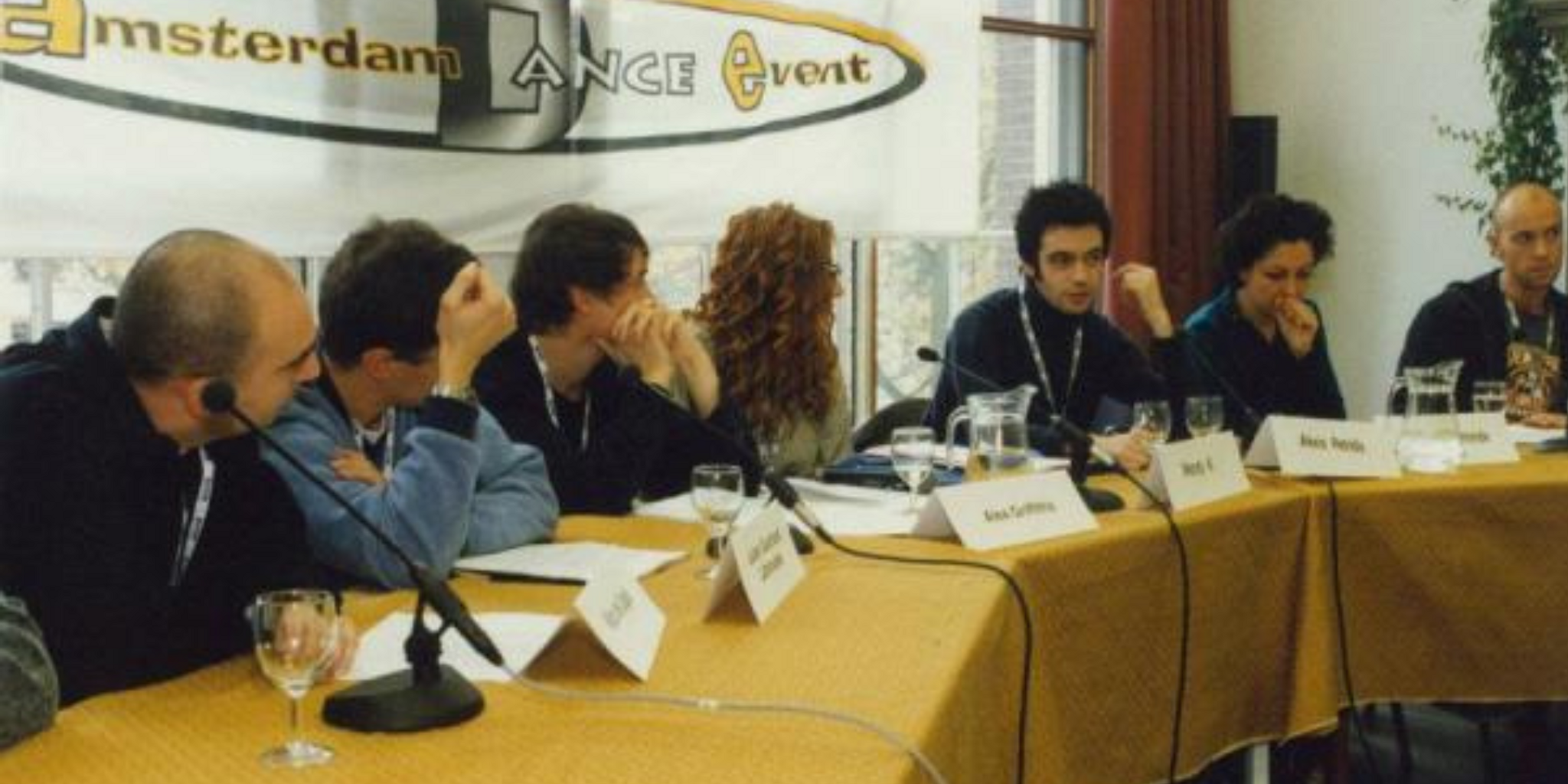
If one person built the ADE that exists today, it is Anna Knaup, widely credited in the Netherlands as one of its founders. By her own account, she took charge in 1997, as general manager of dance at Stichting Conamus, with a brief to put Dutch dance music on the international map. Her verdict on what she inherited was blunt: as it stood, it did not connect with the music industry, and it had to become more dynamic.
She got rid of the market stalls, moved the conference to Felix Meritis in 1998, and travelled the world with flyers to pitch Amsterdam and recruit speakers, at a time when the centre of the dance business was Miami rather than anywhere in Europe. Her biggest decision was expanding the nighttime programme by folding in more subgenres rather than narrowing it, and that split between conference by day and festival by night became the blueprint everything since has been built on.
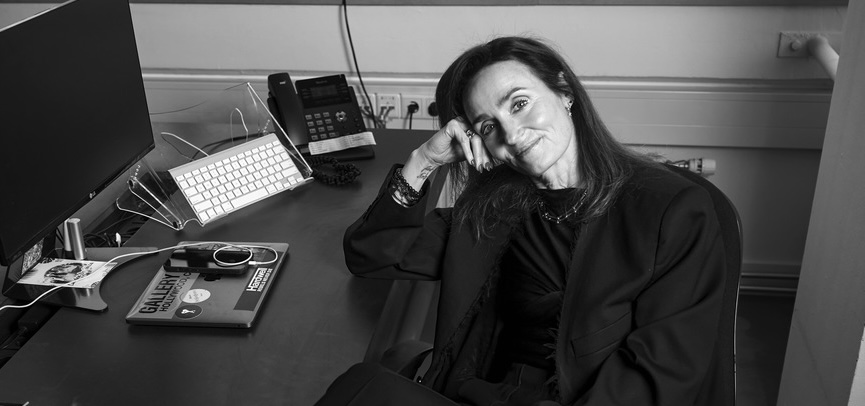
She ran ADE for about three years before leaving sometime around 2000 to focus on Anna Agency, the booking agency she had founded in 1995. Buma Cultuur's director later put it plainly: she was years ahead of her time, and she built ADE out of almost nothing.
The 2000s and 2010s: An unstoppable force
If ADE had a defining sound early on, it was house, with DJ Sneak and Jesse Saunders dominating the programme. Subgenre by subgenre, the event’s scope kept widening, until by the mid-2000s it was broad enough to entertain almost anyone.
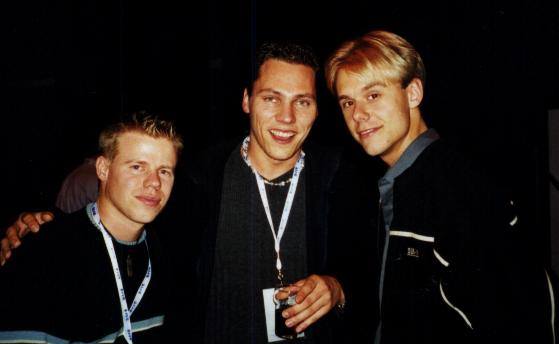
Running underneath it was a Dutch success story that ADE both fed and fed on. Armin van Buuren, Ferry Corsten, Sander van Doorn and Tiësto were all coming up through this period, marking the start of roughly a decade in which Dutch DJs occupied the upper reaches of the DJ Mag Top 100. Amsterdam was hosting the industry's annual meeting and producing its biggest names at the same time.
The look arrived alongside the scale. The famous ADE lettering was introduced in 2006, and the yellow cube joined it in 2010. That same year ADE passed 100,000 visitors for the first time and became the biggest club festival in the world, with every district turning black and yellow, from the centre to the outskirts. For one week a year, Amsterdam wears the same two colours.
2012 to 2021: The whole city becomes the venue
With scale came ambition about space. Working with organisers across Amsterdam, ADE started putting electronic music into the city's cultural monuments, often for the first time in those buildings' histories. Boys Noize played the Rijksmuseum's bicycle passage; Stephan Bodzin played the Scheepvaartmuseum, the Waalse Kerk, a church, hosted club nights.
The conference grew into several smaller conferences, each focused on one subject, from sustainability to music technology, with ADE Pro at the centre drawing professionals from 80 countries. 2016 brought ADE Live, built around artists creating music live on stage, and the first opening concert, with the Metropole Orchestra alongside Henrik Schwarz. The following year came ADE Hangover, a free closing event at the NDSM-Werf, designed to let an exhausted city come down gently.
Then Felix Meritis closed for a badly overdue renovation, and in 2017 ADE lost the home it had occupied since 1998. The Amsterdam Dance Event Foundation took over the organising in 2018, a non-profit far smaller than the event's scale suggests, with six staff and over 70 freelancers.
Where it stands now
ADE returned to Felix Meritis in 2022, and the numbers since have grown to a point the 1996 organisers could have never imagined. The 2025 edition drew a record 600,000 visitors across more than 1,200 events in nearly 300 locations, with 3,500 artists involved.
ADE has also become clearer about what it stands for. It started in 1996, but the music is much older, and ADE is careful to say so. Dance began as a protest against the mainstream and against social injustice, and as a space to celebrate black, queer and trans culture. ADE says it wants to give those voices a bigger platform, aims for an equal split between men and women in the events it programmes itself, and admits in writing that it has not reached that goal yet.
Thirty years on, the size is startling, but it is not the real story. ADE grew out of its daytime programme rather than any plan for the nights. The festival exists because Anna Knaup looked at a trade fair full of executives and decided that was no way to celebrate the music.
Which finally answers the question John de Mol Sr. asked in that meeting in Hilversum. Yes, it is music. It is music that fills a whole city for five days every October, and that people fly across the world to be part of.
2026: Thirty years
This year ADE runs from 21 to 25 October across roughly 300 venues. Here is what the week is made of.
The anniversary specials
ADE has gathered its anniversary events under the name 30 YEARS ADE Icon Series, spread across the whole week rather than saved for one big night. Jean-Michel Jarre is guest of honour, one of the few people who was playing electronic music to huge crowds before ADE existed, appearing both as a performer and in a keynote interview. Dave Clarke Presents: 30 Years of ADE is the night built around the anniversary itself, with Egyptian Lover, DJ Stingray 313, Helena Hauff, Luke Slater and Veronica Vasicka. Away from the venues, the Nighttime Culture Index, made with VibeLab, is a first attempt to measure how healthy nightlife really is in six cities, from Amsterdam to Lagos to Seoul.
From big stadiums to intimate clubs
ADE has no festival site to travel to. Every venue in Amsterdam programmes its own night, so the city itself becomes the festival.
On the bigger end of the spectrum, AMF fills the Johan Cruijff Arena, home of Ajax, with David Guetta, Armin van Buuren, Amelie Lens and Afrojack, while KI/KI makes her Ziggo Dome debut with a five-hour set. The Gashouder, a round former gas holder at Westergasfabriek, is the venue serious dance fans name first, hosting Job Jobse on one night and Armin van Buuren on another. 909 x Loveland brings Kerri Chandler, KiNK and DVS1, Fabric x Loud Contact brings Jeff Mills and Marcel Dettmann, and ZeeZout leans leftfield with Carista and Two Shell.
Then there are the three clubs where all of this started. Paradiso, Melkweg and Escape hosted ADE's very first night in 1996, and thirty years on, all three are still on the programme. Paradiso takes Anjunadeep on the Thursday and Speedy J's STOOR Live across the weekend afternoons. Melkweg opens the entire week with the ADE Opening Concert, then hosts Dave Clarke Presents: 30 Years of ADE, so the anniversary night lands in one of the original three rooms. Escape, which turns forty this year, has Ferry Corsten playing Free Your Mind Club on the Friday, which closes a loop of its own, since Corsten was one of the Dutch DJs who came up alongside ADE in the first place.
Art, and beyond the stage
EINDER, a large installation by the Dutch artist Boris Acket, is the most ambitious thing on the schedule, with the Royal Concertgebouw Orchestra performing Beethoven's Fifth beneath it and Elias Mazian playing under it on another night. Swan Lake Remixed opens the week at the Gashouder, rebuilding the most familiar ballet score there is for a dance floor. At the Wereldmuseum, DISCO: I'm Coming Out traces the disco scene, where much of club culture began. These events start early and sell out fast, so they fit around a club night rather than replacing one.
The conference
ADE Pro’s home is still Felix Meritis, with hubs at the Andaz and Rosewood hotels and the ADE x TicketSwap Global Promoter Hub on Keizersgracht. Talks this year cover everything from merchandise to fashion, sustainability, and music scenes in Brazil, the MENA region and Sub-Saharan Africa. You’ll need a Pro Pass, which also covers entry to the music programme. If you don’t have a Pro Pass, you can browse the ADE collection on TicketSwap and purchase event tickets separately.
With 1,200 events over five days, the real skill is choosing what experience to have. One night might be a warehouse in Noord, the next a concert hall, a museum, a former gas works or a boat out on the IJ. You can follow a single sound all week, or never hear the same thing twice, there is no wrong way to do it.
Thirty years in, it is still one of Amsterdam's most important events of the year. If this is your year, start planning your experience with TicketSwap.


